

June in the Lehigh Valley is what pool ownership is actually about. The weather cooperates, the yard looks good, and the pool becomes the center of everything your summer has to offer. Keeping that water clear, safe, and inviting through a full season of use takes some routine effort, but the process is more approachable than most new pool owners expect.
The homeowners who consistently enjoy crystal clear pool water through the summer share a common habit: they stay ahead of the chemistry rather than reacting to problems after they show up. That consistency is really all it takes. A reliable weekly pool maintenance routine, a basic understanding of pool water chemistry, and a clear sense of when to call a professional will carry you through the season without the frustration of cloudy water, algae, or equipment surprises. This clear water guide breaks the process down into simple steps any pool owner can follow.
Building a Weekly Pool Maintenance Routine That Holds
Consistency matters more than intensity when it comes to pool care. A pool that gets attention once a week in measured, methodical steps will outperform one that gets ignored for two weeks and then aggressively treated in a panic. The good news is that a proper weekly pool maintenance routine takes less time than most people assume.
Skim the surface first. Before you touch any chemicals or equipment, remove floating debris from the water with a leaf skimmer. Organic matter left in the water breaks down and creates demand on your chlorine, pulling it away from its actual job. Removing debris before it sinks also reduces vacuuming time later.
Brush the walls and floor. Algae and mineral deposits prefer to start in places that don’t get much circulation: step edges, corners, behind ladders, and along the waterline. A weekly brushing disrupts that before it has a chance to take hold. For gunite pools, which are the standard for custom inground construction in Pennsylvania, a stainless steel brush handles the texture effectively.
Vacuum or run your automatic cleaner. Settled debris on the floor of the pool will cloud the water and tax the filter if left alone. Vacuuming weekly, or running an automatic cleaner on a regular schedule, keeps the floor clean and the water clearer between professional visits.
Test and adjust your water chemistry. This is the step that determines everything else. Test before you add anything, make specific adjustments based on what you find, and let the system circulate before testing again. Treating the water without testing first is the most common source of imbalance.
Check and clean the skimmer and pump baskets. Clogged baskets reduce water flow, which means reduced filtration efficiency and added strain on the pump. This takes about two minutes and is worth doing every week.
Inspect your equipment visually. A quick look at the pump, filter, and any automation systems during your weekly routine often catches small issues before they require a service call. Unusual sounds, water where it shouldn’t be, or pressure gauge readings outside the normal range are all worth noting.
Pool Water Chemistry:
What the Numbers Actually Mean
Understanding pool water chemistry doesn’t require a background in chemistry. What it requires is knowing which parameters matter, what range each should be in, and how they affect one another. These are the readings that keep your water safe, comfortable, and clear.
The core parameters to monitor regularly:
- pH (target 7.2–7.8): The most important variable in your water. At the right pH, chlorine does its job. Too high and chlorine becomes significantly less effective; too low and the water can irritate skin and eyes and begin corroding equipment surfaces.
- Free chlorine (target 1–3 ppm for residential pools): The active sanitizer that kills bacteria and prevents algae. Maintaining adequate free chlorine throughout the week is the foundation of water safety.
- Total alkalinity (target 80–120 ppm): Think of alkalinity as pH’s stabilizer. When alkalinity is in range, pH holds steady and doesn’t require constant correction.
- Calcium hardness (target 200–400 ppm): Low calcium makes water “hungry” — it will pull minerals from pool surfaces and equipment to compensate. High calcium leads to scaling. Getting this in range and keeping it there extends the life of your pool’s interior finish.
- Cyanuric acid / stabilizer (target 30–50 ppm for outdoor pools): Protects chlorine from being broken down by UV rays. Without it, sunlight can deplete your chlorine level significantly within hours of adding it. Too much, however, reduces chlorine’s effectiveness — a condition sometimes called chlorine lock.
- Combined chlorine / chloramines (should be near 0 ppm): When combined chlorine creeps above 0.5 ppm, that’s when the familiar strong pool smell shows up and swimmers experience eye irritation. Shock treatments address this.
These parameters interact with each other. Chlorine at the right concentration but the wrong pH is substantially less effective. Alkalinity out of range makes pH hard to stabilize no matter how often you add correctors. Testing all parameters weekly, rather than just checking chlorine in isolation, gives you a complete picture and makes adjustments simpler and more predictable.
Pool Filter Maintenance:
The Part Most Homeowners Underestimate
The filter is the mechanical heart of a clean pool. It runs continuously, pulling water through a medium that captures fine particles, oils, and contaminants that chemicals alone can’t address. Filter maintenance is one of the most commonly neglected areas of pool care, and neglecting it costs homeowners both water clarity and equipment longevity.
Three filter types are common in residential pools, each requiring different care.
Sand filters are the most widespread. Water passes through a bed of pool-grade sand that traps fine debris. Over time, the sand bed becomes packed and its filtration efficiency drops. Backwashing (reversing the flow to flush accumulated debris out of the tank) is the routine maintenance step, typically done when the pressure gauge reads 8–10 psi above the clean operating baseline. The sand itself should be replaced every five to seven years.
Cartridge filters use a pleated polyester element that catches fine particles down to 10–15 microns — finer than sand. Cartridges need to be removed and rinsed every four to six weeks during the swim season, and replaced when the material shows wear or when cleaning no longer restores normal pressure. A cartridge filter running with a clogged element is working much harder than it should.
DE (diatomaceous earth) filters provide the finest filtration of the three types, capturing particles down to 3–5 microns. They require backwashing similar to sand filters, plus the addition of fresh DE powder after each backwash cycle. DE filters are common on custom inground pools where water clarity is a priority.
Regardless of type, keeping an eye on your pressure gauge is the simplest ongoing habit for filter care. A steady rise in operating pressure is the clearest signal that the filter needs attention.
How Often Should You Test Your Pool Water?
For most residential pools during the swim season, testing two to three times per week is the practical standard. Testing more frequently after events that place high demand on the water — a full weekend of swimmers, a significant rainstorm, or a stretch of intense summer heat — helps catch shifts before they become problems.
Home test kits have improved considerably. Liquid drop test kits provide reliable readings for pH and chlorine. Multi-parameter test strips offer a broader view of the water in one step. Digital testers and app-connected analyzers take more guesswork out of interpretation and can log readings over time, which is useful for noticing patterns. None of these replace a comprehensive professional water test once a month, particularly early in the season when chemistry tends to be less stable.
The rule of thumb that holds up in practice: test more than you think you need to in June. As the season settles and you understand your pool’s particular behavior under your conditions, you’ll find the right rhythm.
Ready to hand off the chemistry and the weekly routine to someone who does this for a living?
B&B Custom Pools offers weekly and bi-weekly valet service through B&B Pool Service
including water testing, chemical balancing, skimming, filter maintenance, and detailed service reports after every visit.
Request pool care service here
When to Call a Professional:
Recognizing the Limits of DIY
For many pool owners, especially those with simpler rectangular pools and straightforward chemical needs, a weekly maintenance routine is completely manageable. Custom inground pools, particularly those with integrated spas, water features, or automation systems, add variables that make professional involvement more valuable.
A few situations worth recognizing:
Water that won’t balance despite repeated correction usually signals an underlying issue — a filtration problem, a stabilizer level that’s too high, phosphate buildup, or a water volume issue. These take a practiced eye to diagnose and resolve efficiently.
Equipment that’s behaving differently than normal, whether that’s a pump that sounds different, a filter that pressurizes faster than it used to, or a heater that doesn’t reach temperature, deserves attention before it becomes a breakdown mid-July.
Staining on pool surfaces, whether from minerals, metals, or organic material, requires specific treatment based on the cause. Using the wrong approach can set the stain rather than remove it.
Algae that has progressed beyond a few spots to a visible bloom is faster and more reliably resolved with professional-grade shock treatment and the right follow-up chemistry, particularly in the heat of a Pennsylvania summer.
What Professional Pool Care Through B&B Actually Looks Like
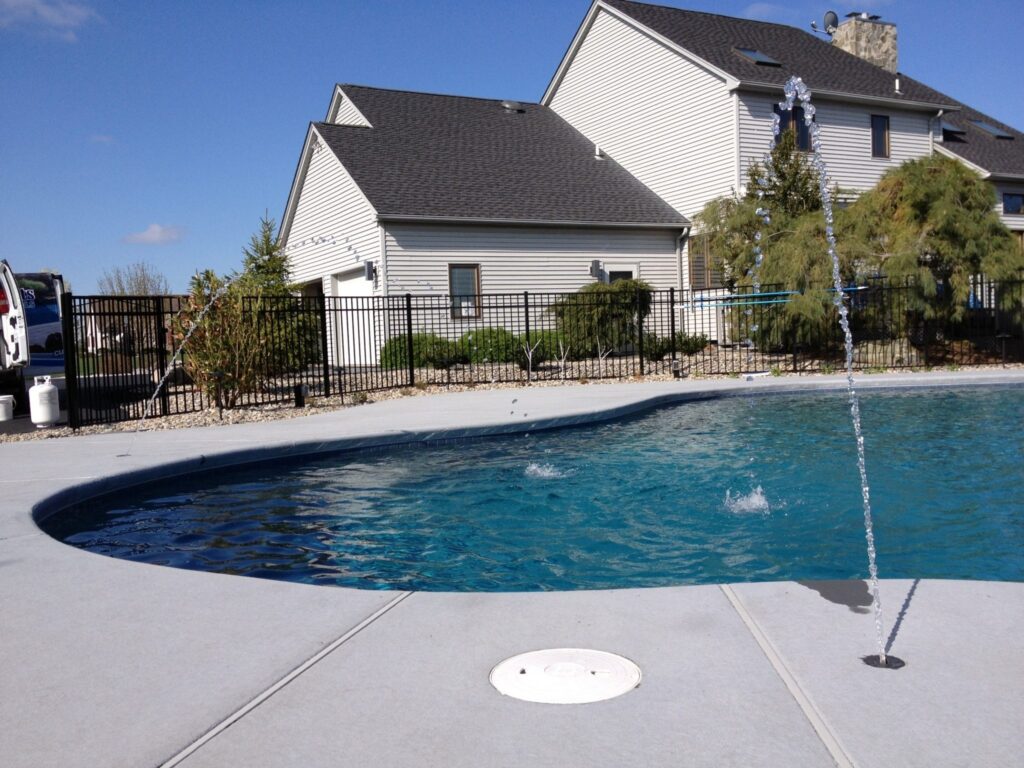
B&B Custom Pools provides professional pool care to homeowners across the Lehigh Valley. All of our technicians hold Certified Pool Operator (CPO) credentials and understand the specific equipment, plumbing, and chemistry requirements for custom gunite pool care in Pennsylvania’s climate.
Valet service is offered on weekly and bi-weekly schedules. Each visit includes water testing and chemical balancing, surface skimming and cleaning, filter maintenance, equipment performance checks, and a documented service report so you always know exactly what was done and what was observed. You come home to a pool that’s been looked after. No guessing, no catching up.
Beyond routine care, the B&B service team handles equipment diagnostics and repairs, chemical applications, spring openings, fall winterizations, and off-season winter watch monitoring. Homeowners who prefer a single point of contact for every pool-related need, from a service question in July to a renovation conversation in October, will find that structure through B&B.
Keeping Your Pool in Its Best Condition Through the Season
A custom pool built to your specifications and finished to a high standard deserves consistent care that matches. The investment you made in the design, the materials, and the craftsmanship extends further when the water is properly maintained, the equipment runs well, and small issues are caught early.
Weekly pool maintenance doesn’t need to be complicated. Skim, brush, vacuum, test, and check the equipment. Understand what your water chemistry numbers mean and make targeted adjustments rather than guessing. Keep the filter clean so it can do its job. And when the work is more than you want to manage, or when something doesn’t look right, reach out to a professional who knows your pool.
Summer should be enjoyable. The pool should be the easiest part of your weekend, not the most stressful.
For professional pool maintenance in the Lehigh Valley, explore B&B’s full range of pool care services or reach out to schedule service today.