


By August, most Lehigh Valley pools have been running at full capacity for three months. The water has handled weekends of heavy use, the equipment has run through its daily cycles, and the surface that holds it all together has taken another season of sun, chemistry, and foot traffic. This time of year, the condition of your pool is easier to read clearly than it is in May, when the water is still new and optimism is high.
If something has been nagging at you — a rough texture underfoot, persistent staining that won’t clear with treatment, equipment that cycles on and off more than it used to — August is a useful time to look at it honestly. Not because a renovation has to happen immediately, but because the homeowners who get the best results from pool renovation projects are the ones who start planning before fall calendars fill.
We’ve been completing pool renovations across the Lehigh Valley since 1973, and we’ve seen every pattern of wear and deterioration in this climate. Here are the five signs that consistently point to a pool that’s ready for renovation — and what each one means for the work ahead.
1. The Plaster Is Rough, Worn, or Stained
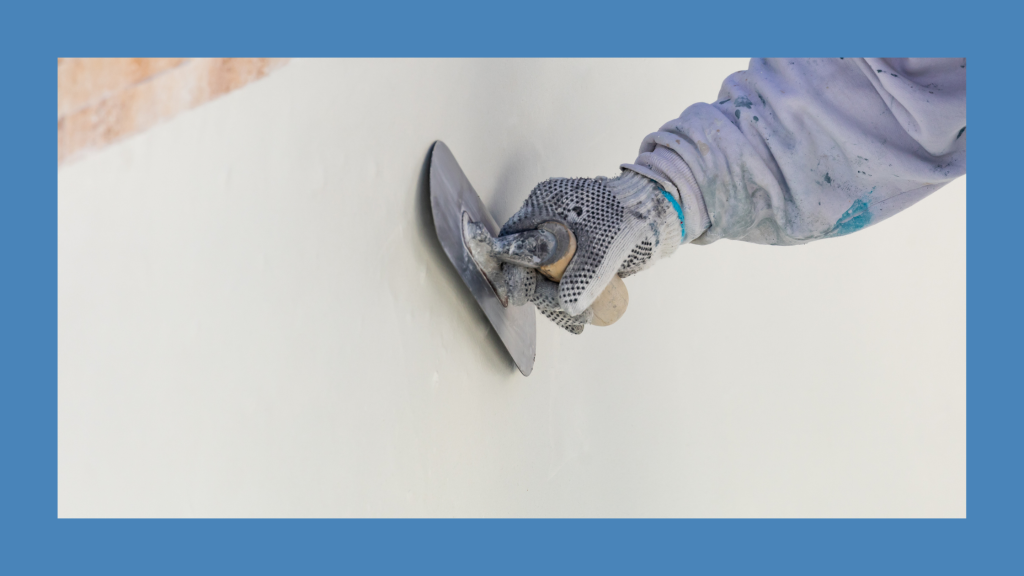
Pool plaster is durable, but it has a service life. Standard plaster typically lasts 15 to 20 years under regular use and properly maintained water chemistry. Marbelite — a proprietary blend of white cement and marble dust that we’ve used for decades — can last 40 years or more. Once plaster reaches the end of its service life, it makes itself known in specific, recognizable ways.
Rough texture underfoot is usually the first complaint, particularly in high-traffic areas like steps, shallow ledges, and the pool floor where children spend most of their time. The surface that once felt smooth has developed small pits and an abrasive quality that catches skin. Etching and crazing — small cracks and irregular surface patterns — often follow. Persistent staining that won’t respond to chemical treatment is another common sign, typically appearing as brown, gray, or rust-colored discoloration concentrated around return jets, corners, or low-circulation zones. Calcium scaling that reappears quickly after cleaning indicates that surface porosity has changed in ways that make mineral deposits difficult to control.
These aren’t cosmetic inconveniences. Deteriorated plaster is more porous and chemically less neutral than sound plaster, which makes maintaining balanced water chemistry increasingly difficult. What begins as a texture issue compounds over time into a chemistry challenge and, eventually, into structural concerns if the surface is allowed to fail completely.
Replastering is the core of most pool renovation projects. Options include standard plaster, Marbelite for long-term durability and longevity, and the NPT Pool Finishes line — quartz, glass bead, pebble, and polished options that provide both enhanced performance and a more refined finish than basic plaster. For renovation work where a particular balance of cost and appearance is the goal, Diamond Brite is another option we work with regularly.
Learn more about pool renovation options
2. Your Tile Is Cracking, Chipping, or Dated

Pool tile runs along the waterline and across steps, ledges, and any surface where plaster transitions to the coping. Its function is both protective and aesthetic. The tile band seals the transition zone where water movement and water chemistry are most concentrated. When it begins to fail, both functions are affected.
Cracked or chipping tile exposes the substrate beneath to water infiltration, which accelerates the deterioration of surrounding materials. Loose tiles — particularly on steps and entry ledges — are a safety concern. Grout that has eroded or taken on staining provides a foothold for algae that resists standard treatment. In older pools, the tile pattern and color can visually date the entire space in ways that undermine what is otherwise a well-maintained backyard.
Tile replacement is typically scheduled as part of broader renovation work, since replastering and tile work share access requirements and pool drainage. If your pool is approaching or past the 20-year mark, addressing plaster and tile together in a single project is usually more practical — and more cost-effective — than staging the work across separate seasons.
3. Your Equipment Is Working Harder Than It Should
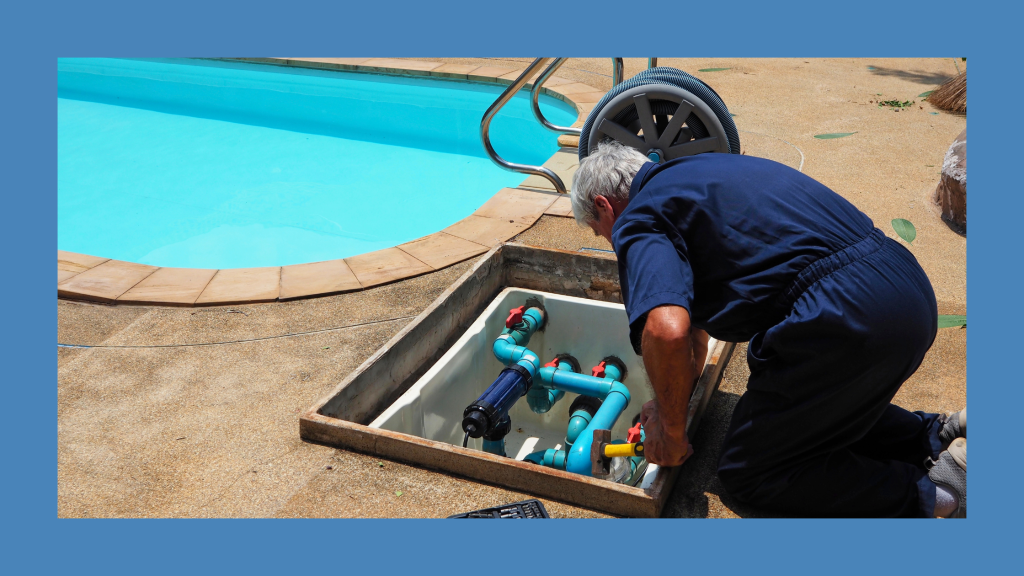
Pool equipment has a well-documented service life. Most pumps, filters, and heaters are built to perform reliably for 8 to 12 years under normal use. Beyond that range, the pattern we see most often is equipment that demands more attention and more electricity to accomplish the same results it once handled without effort.
Older single-speed pumps are the most common culprit. A variable-speed pump runs at lower speeds during non-peak periods, adjusting output to actual demand rather than running at full capacity around the clock. Upgrading from a single-speed model to variable-speed can reduce energy consumption by up to 80% compared to older equipment — a difference that shows up on a summer utility bill in Allentown or Bethlehem in ways that are easy to track. The efficiency improvement is meaningful enough that the equipment upgrade often pays for itself over a few seasons.
Beyond pumps, look at your heater’s recovery time — the duration it takes to bring the pool to temperature after a cool night or an extended period of non-use. Look at your filter’s flow rate and whether it’s keeping your water clear within its standard daily runtime. If you’re extending pump cycles year over year to achieve the same water quality, the equipment is telling you something worth paying attention to.
Equipment upgrades don’t always require a full renovation. But they’re often paired with one, because plaster and tile work requires draining the pool — and a drained pool is the most practical time to swap equipment and replumb returns without creating additional disruption.
Talk to our service team about what’s worth replacing
4. The Space Around Your Pool No Longer Fits How You Use It
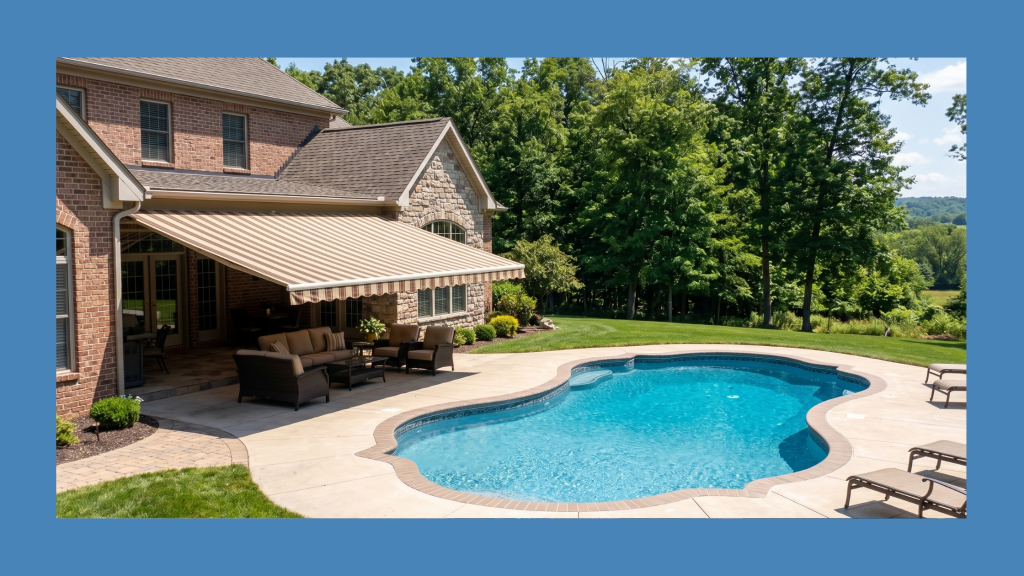
This sign is harder to quantify than cracked plaster or an aging pump, but it’s real and it’s the one homeowners most often describe as “I just don’t use the backyard the way I thought I would.”
The pool itself may be structurally sound. The surface may be in decent condition. But the deck is cramped for the gatherings you actually host. The concrete has cracked and settled after years of freeze-thaw cycles in the Lehigh Valley. There’s no shade on the western exposure, which makes the space unusable on summer afternoons. The kitchen is inside, which means the host spends half of every gathering shuttling in and out. The landscape around the pool has never quite come together.
These aren’t pool problems — they’re backyard problems. And a pool renovation is often the catalyst that finally makes the complete conversation possible.
At B&B Custom Pools, we design and build pool, patio, landscape, and outdoor structures as a single integrated project. When a renovation is the starting point, we assess the pool in the context of the full backyard — not as an isolated structure. If the deck needs replacement, if a pergola would transform how the space functions, if an outdoor kitchen has been on the list for years, we plan those elements together with the pool work and build them as one environment. The result is a backyard that holds together rather than a space assembled in phases by people who weren’t talking to each other.
5. You’ve Outgrown the Pool You Have

This is less common than surface and equipment wear, but it happens: the pool that fit your life 15 years ago no longer reflects how you actually live in your backyard. Kids who once needed a shallow play area are teenagers who want more depth and lane space. A couple that bought for quiet laps now hosts regular family gatherings and needs more social area. A backyard that felt complete when the pool was new now feels like something is missing — a spa, a water feature, a dedicated entertaining zone that the current layout doesn’t support.
B&B Custom Pools builds exclusively in gunite — a reinforced concrete construction method that allows for fully custom shapes and structural modifications that vinyl liner and fiberglass pools cannot accommodate. Adding a spa adjacent to an existing gunite pool, integrating a water feature, or extending a shallow seating ledge are all within the scope of what a renovation can address, depending on the existing structure. We assess each project individually, but expanding a well-built gunite pool is often more practical than homeowners assume.
Explore water features and spa additions
Why Late Summer Is the Right Time to Start Planning
The conversation we have most often in October or November is some version of “I should have called in August.” It’s not regret about the pool itself — it’s regret about timing. Renovation projects require design work, permitting, material lead times, and scheduling. Contractors who do quality work in the Lehigh Valley fill their renovation calendars in advance, and fall is when that scheduling happens.
If you want your pool renovated and ready before next summer, the planning window is open right now. A fall renovation typically follows the season’s natural rhythm: the pool closes in October as it normally would, the renovation work happens over the winter or early spring, and the pool opens in May looking and performing like a different space entirely. The disruption happens during the months you’re not using it anyway.
Financing is worth factoring into the planning early. B&B Custom Pools offers financing options through HFS Financial. Understanding the scope of a project, what it will cost, and how to structure it financially is part of the planning conversation — not something to resolve under time pressure once you’ve already decided to move forward.
Learn about pool renovation financing
What a Pool Renovation With B&B Custom Pools Looks Like
We are a design-build firm, not a renovation-only contractor. That distinction matters because it means we approach renovation projects with the same design attention we bring to new pool construction. A renovation isn’t only about restoring an aging surface — it’s an opportunity to assess whether the pool is actually delivering what you need from it, and to correct the gaps in the process.
Our crews are in-house. No subcontractor chains, no handoffs between parties who may not share the same standards. The team involved in the design phase is the team doing the construction work. For a homeowner, that means one consistent point of accountability and a finished space that reflects one vision rather than the cumulative compromises that come from managing multiple vendors across a single project.
With 1,000+ pools built and renovated across the Lehigh Valley since 1973, the finish options, equipment recommendations, and structural decisions we make are grounded in real project history — in this climate, with these soil conditions, and in the specific wear patterns that affect pool longevity in Eastern Pennsylvania. If you’ve been noticing the signs and wondering whether this is the year to act on them, we’d welcome the conversation.