

Pool season in the Lehigh Valley always seems to end faster than it feels like it should. One week you’re squeezing in a Labor Day swim, and the next the mornings carry that first real chill. How you close your pool this fall has a direct effect on how much time, money, and hassle you spend reopening it next spring.
This pool closing guide walks through what a proper pool closing involves, so you know what to expect whether you’re doing it yourself or booking a pool closing service for your Lehigh Valley backyard.
our pool closing guide – Why Closing Your Pool the Right Way Matters
Closing a pool is more than draping a cover over it and hoping for the best. Cold weather is hard on both water and equipment. Water left in plumbing lines, filters, pumps, or heaters expands as it freezes, and that expansion cracks pipes and damages equipment that’s expensive to replace. Unbalanced water chemistry left sitting all winter can also stain or etch pool surfaces and invite algae growth that makes for a slow, costly spring opening.
A closing done right protects your pool’s structure, its equipment, and the investment you’ve made in your backyard.
Step 1: Give the Pool a Final Deep Clean
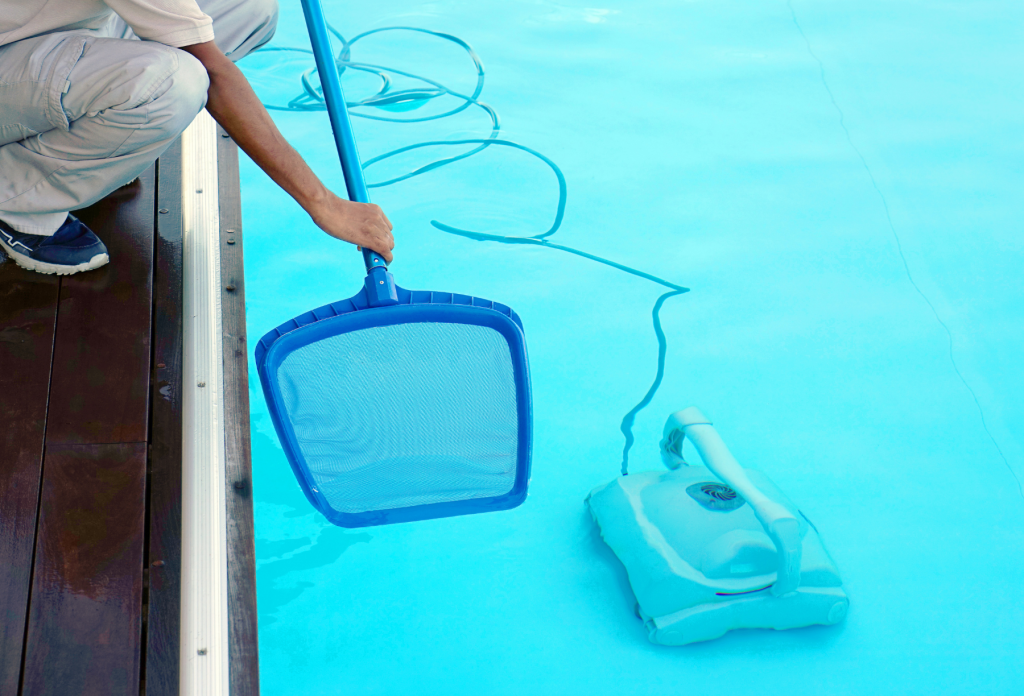
Before anything else, give the pool a thorough cleaning. This is the last chance to remove debris that would otherwise decompose under the cover all winter, staining surfaces and feeding algae.
- Skim the surface for leaves, twigs, and debris
- Brush the walls and floor to loosen dirt and early-stage algae
- Vacuum the pool floor to remove anything that’s settled
A clean pool at closing means a cleaner pool at opening.
Step 2: Balance the Water Chemistry
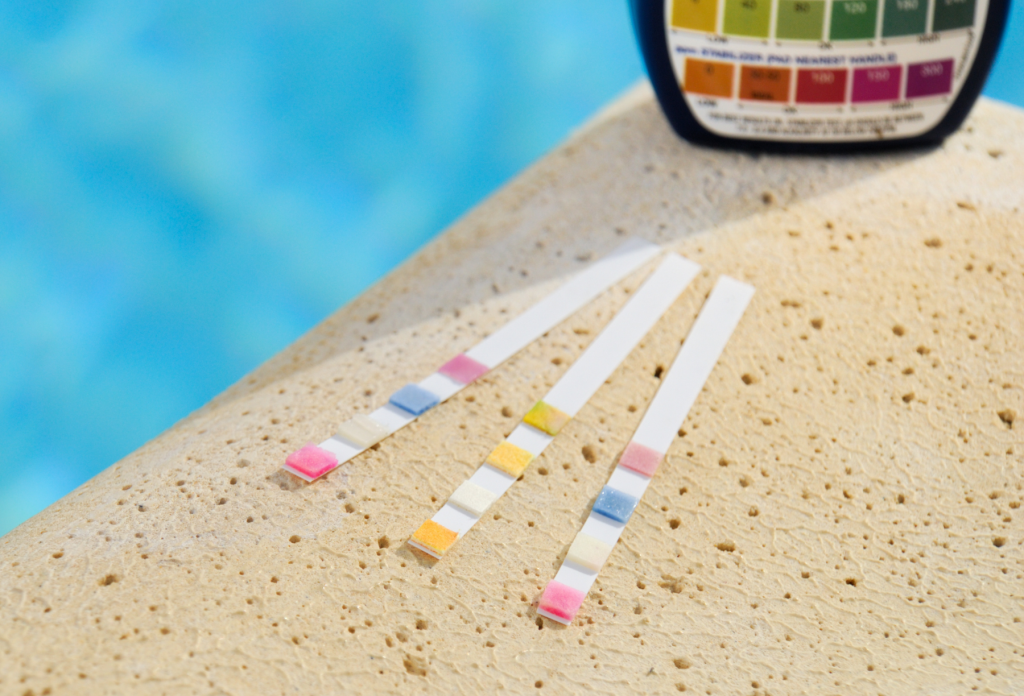
Water chemistry matters as much in the off-season as it does in July. About a week before closing, test and adjust these levels:
- pH: 7.4 to 7.6
- Alkalinity: 80 to 120 ppm
- Calcium hardness: 200 to 400 ppm
Once balanced, add a shock treatment to clear out any lingering contaminants, and let the chlorine level settle back into a normal range before moving on.
Step 3: Add Winterizing Chemicals
Winterizing chemicals are different from what you use during swim season. A typical closing kit includes a long-lasting winter algaecide to keep algae spores from blooming under the cover, along with a stain and scale preventer to protect your pool’s finish from mineral buildup. Circulate the water for a few hours after adding these so they distribute evenly.
Step 4: Lower the Water Level
Lowering the water level protects your skimmers and tile line from freeze damage. How far depends on the cover:
- Mesh safety covers: lower the water 12 to 18 inches below the skimmer
- Solid, floating covers: lower the water 3 to 6 inches below the skimmer
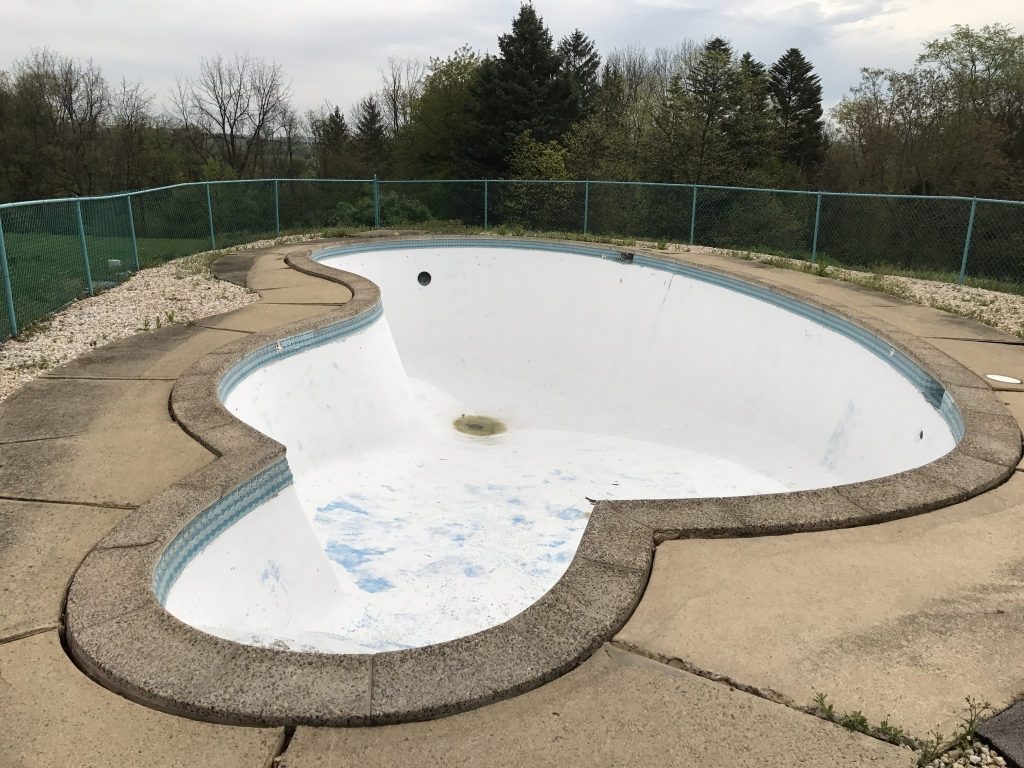
Never drain a gunite pool completely for winter. The water helps support the pool’s structure through the cold months.
Step 5: Drain and Winterize Your Equipment
This step prevents the most costly kind of freeze damage. Proper pool winterization requires all water to come out of the plumbing lines, pump, filter, and heater — a blower or shop vac clears the skimmer and return lines, which then get sealed with winter expansion plugs. This is where a professional pool closing service earns its keep: getting every line fully cleared takes the right equipment and an eye for what’s easy to miss.
Step 6: Install a Pool Safety Cover
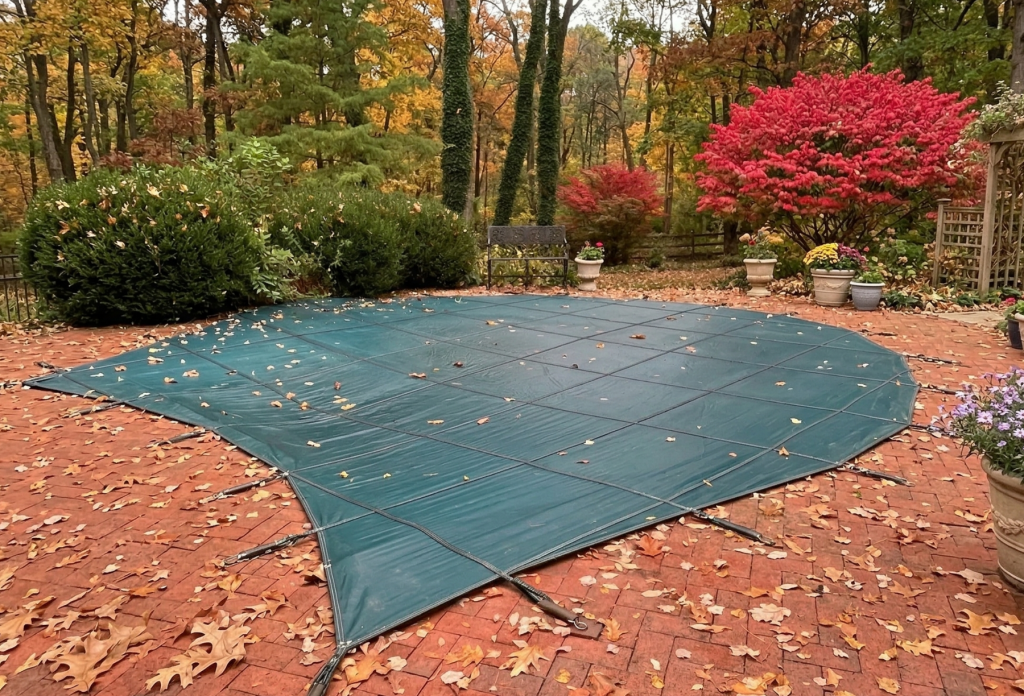
A properly fitted safety cover does more than keep debris out. It protects kids and pets, keeps algae-feeding sunlight off the water, and is one of the last steps in a complete pool closing. B&B’s safety cover installations are custom CAD-fitted to your pool’s exact shape, not a generic tarp stretched over the edges.
When to Schedule Your Pool Closing
Booking early matters more than it might seem. The Lehigh Valley’s first hard freeze doesn’t wait for a convenient weekend, and pool closing appointments fill up fast once the weather turns. Our in-house team handles closings throughout Emmaus, Allentown, Bethlehem, and the surrounding Lehigh Valley — booking now means your pool gets closed on your timeline, not whatever’s left on ours.
Ready to Close Your Pool for the Season?
A proper pool closing protects everything you’ve invested in your backyard. Whether you’re tackling it yourself or want our team to handle it start to finish, now is the time to get on the schedule before temperatures drop.